*Sponsored
TopStocks Alert: (NYSE: GORO) A Bigger Company, A Bigger Portfolio and More Room to Grow.
Goldgroup Mining Inc. (NYSE: GORO; TSXV: GORO) is Entering its Next Phase with Two Producing Mines, Additional Production Opportunities, and a Growing Portfolio of Precious-Metals Assets.
With Gold’s Outlook Turning Increasingly Bullish, GORO Comes into Focus.
2026 Marked a New Chapter
From its portfolio to its production profile, Goldgroup has changed in a big way in 2026.
Following its merger with Gold Resource Corporation, (“Gold Resource”) in July 2026, Goldgroup now has a substantially expanded precious-metals portfolio that includes:
- Two producing mines
- A formerly producing gold operation being evaluated for a potential restart
- A major North American development project
For investors looking at the Company today, the story is no longer simply about exploration or a single mine.
It is about current production, potential production growth, exploration opportunities and longer-term development optionality — all within one company.
And now the next chapter will be about execution.
Over the longer term, the Company’s strategic vision is to build Goldgroup into an intermediate gold producer, subject to successful exploration, project development, permitting, financing, construction and operating performance.
Goldgroup is a mining story that combines the cash-flow potential of a producer with the growth opportunities of a developer, while offering a broader platform than a typical junior explorer.
Key Highlights
- Building Toward Higher Production: The Company currently has two producing mines, while San Francisco is being evaluated for a potential restart.
- No Debt: Goldgroup does not currently have a material amount of debt.
- This gives the Company meaningful financial flexibility as it advances its portfolio, funds exploration and mine-planning activities, and evaluates potential growth opportunities without the same balance-sheet pressure faced by highly leveraged peers.
- Existing Production Provides Gold Exposure Today: Goldgroup already operates two producing mines, giving the Company exposure to gold prices through existing production rather than relying solely on future exploration success. Higher metal prices can potentially support revenue and margins, depending on production levels and operating costs.
- Silver Provides Additional Precious-Metals Exposure: Goldgroup also has exposure to silver through its Don David polymetallic operation.
- San Francisco Could Increase Future Production: Goldgroup's 100%-owned San Francisco project in Sonora, Mexico hosts Measured Mineral Resources of approximately 48.3 million tonnes grading 0.37 grams per tonne (“g/t”) gold containing approximately 681,700 ounces of gold and Indicated Mineral Resources of 56.8 million tonnes grading 0.35 g/t gold containing approximately 644,900 ounces of gold for total Measured and Indicated Mineral Resources of 1.05.1 million ounces of gold. Inferred Mineral Resources total 17.3 million tonnes grading 0.32 g/t gold containing 178,400 ounces of gold. The Mineral Resource Estimate is effective April 30, 2026. Mineral resources are not mineral reserves and do not have demonstrated economic viability.
- Additional Exploration and Development Potential: The merger with Gold Resource in July 2026 expanded Goldgroup's asset base to include Don David in Oaxaca, Mexico, the Back Forty development project in Michigan U.S.A., and additional exploration opportunities. Don David provides an existing producing operation, while the broader Arista complex and surrounding district offer further exploration potential.
- Experienced Management and Operating Team: Goldgroup's team brings mining and operating experience, including experience working in Mexico. The Company's focus is now on managing its existing operations while advancing its development and exploration portfolio.
- Eric Sprott Remains a Notable Shareholder: Eric Sprott's involvement with Goldgroup predates the 2026 merger with Gold Resource. Based on public filings, he invested approximately C$6.75 million in Goldgroup’s March 2025 private placement and added a further C$1.5 million in a subsequent private placement in August 2025. In connection with Goldgroup’s merger with Gold Resource, he received 2.55 million Goldgroup shares for his Gold Resource holdings and subsequently acquired an additional 325,000 shares in the open market on August 14, 2026 for approximately C$1.27 million.
A Transformed Goldgroup
The July 2026 combination with Gold Resource brought the Don David operation in Oaxaca and the Back Forty development project in Michigan into Goldgroup's portfolio, complementing the Company's existing Cerro Prieto mine and San Francisco project in Sonora.
The result is a diversified portfolio with four principal assets:
- Don David — a producing underground gold-silver rich polymetallic operation in Oaxaca;
- Cerro Prieto — a producing open-pit heap-leach gold mine in Sonora;
- San Francisco — a formerly producing open-pit gold operation in Sonora being evaluated for a potential restart; and
- Back Forty — a large-scale gold-rich volcanogenic massive sulfide (VMS) development project in Michigan.
That combination gives GORO something increasingly valuable in the mining sector: a producing base today combined with multiple opportunities to grow tomorrow.
A Russell 2000 Index Deletion and Subsequent Trading Volatility
As noted by precious-metals commentator Brian Lundin, Goldgroup's removal from the Russell 2000 may have contributed to unusual trading pressure on the Company’s shares. Index removal can result in selling by funds and other market participants that track or benchmark against the applicable index, regardless of changes in a company’s underlying business.
Following the Company’s removal from the index, there was a nearly 50% decline in the share price in roughly a week. The decline occurred after the Company completed its transformational merger with Gold Resource, which expanded its portfolio to include four 100%-owned assets, including two producing mines, a permitted past-producing operation and a major development project.
The Company’s business profile has changed significantly, while the stock’s performance has not reflected that change to the same extent. This provides an opportunity to consider how the market may be evaluating Goldgroup following the Company’s recent developments.
Research Capital Initiates Coverage
Research Capital initiated coverage of Goldgroup on August 12, 2026, following the Company’s merger with Gold Resource.

Its rating, price target and estimate represent the analyst’s views as of the report date, are subject to change, are not Goldgroup guidance and are not adopted or endorsed by Goldgroup.

Keep on reading to learn more about GoldGroup’s existing production and growth plans in 2026 and beyond.
Two Mines Are Already Producing
Goldgroup isn’t waiting on a future discovery to become a producer—it’s ALREADY producing.
Both Don David and Cerro Prieto are already operating.
Don David: Production, Cash Flow, Plus Exploration
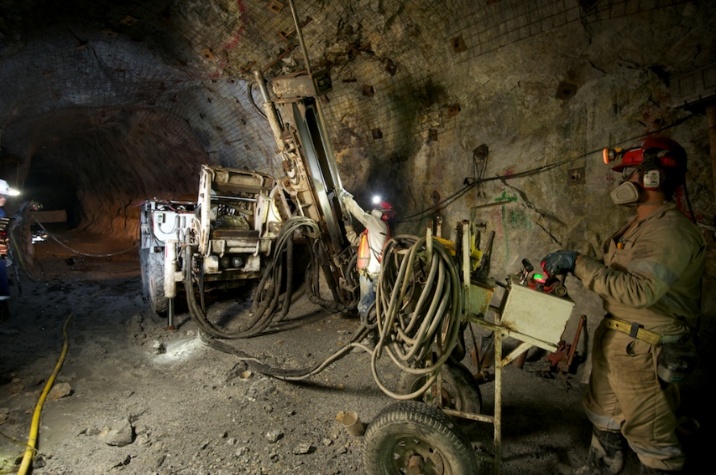
Don David is an underground gold-silver polymetallic operation sustained by two separate mineralized zones (Arista and Alta Gracia) located on the Company’s mineral concessions in Oaxaca.
In addition to gold and silver, the operation produces copper, lead and zinc, providing additional metal credits.
The Arista complex contains multiple mineralized systems, including Arista, Three Sisters and Switchback. Goldgroup is continuing to explore these systems while also working to improve operating performance.
One area of focus has been reducing dilution through changes in mining methods. The Company has reported that, in areas where cut-and-fill mining has been implemented, dilution has declined from approximately 40% to 17%.
Further exploration and operating improvements could provide opportunities to improve the performance and longevity of the existing operation; however such outcomes are uncertain and remain subject to additional drilling, sampling, technical analysis and economic evaluation. The Company is evaluating additional exploration targets on current mineral concessions as part of a regional strategy. However, any additional mineralization identified through exploration would require further drilling and technical evaluation before it could be incorporated into a Mineral Resource or Mineral Reserve estimate or a mine plan.
Accordingly, Don David provides current production together with exploration and optimization opportunities, the significance and impact of which will depend on future results and further technical evaluation.
Cerro Prieto: Another Producing Gold Asset
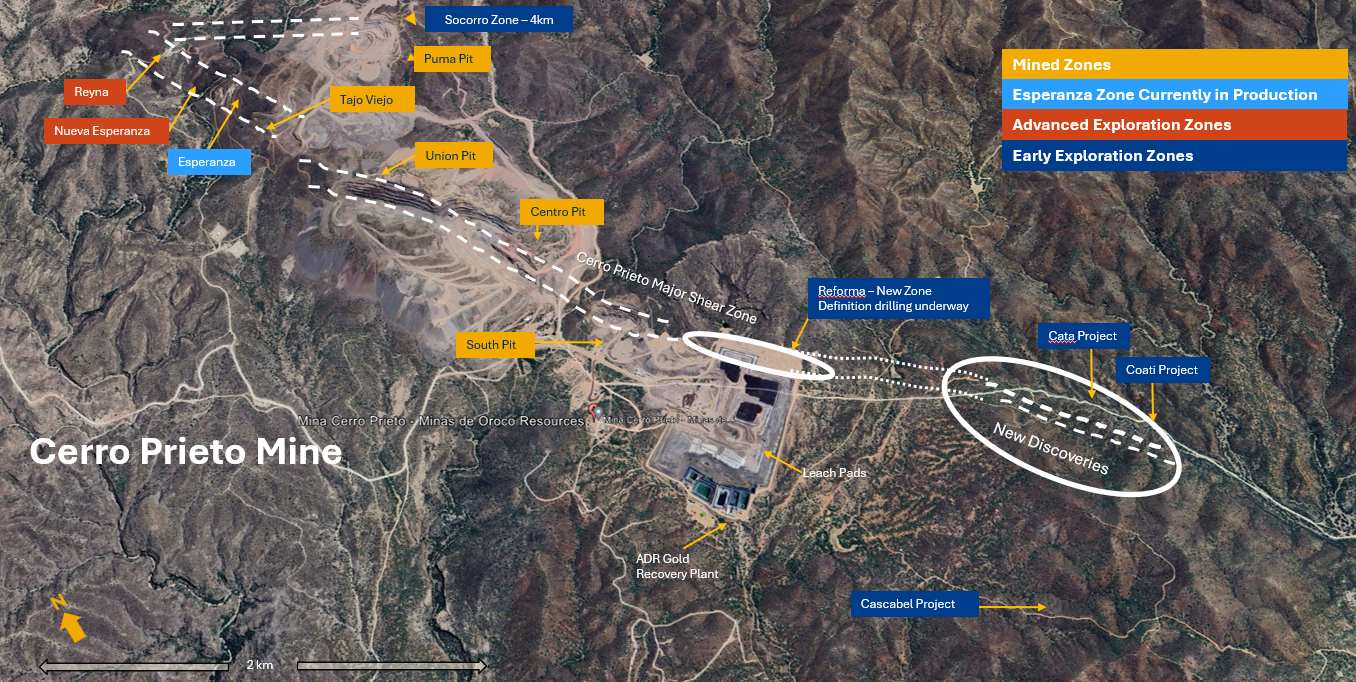
Cerro Prieto is a 100%-owned open-pit heap-leach gold mine in Sonora that has been producing since 2013.
The operation provides another source of gold production while Goldgroup evaluates opportunities to expand resources and potentially extend mine life. The Company is investigating the possibility of reprocessing and releaching the existing leach pads which could produce low-cost ounces.
Exploration targets include a mineralized shear zone extending for more than two kilometres, as well as targets such as Nueva Esperanza and Reyna.
These are exploration opportunities, not established additional reserves or production. Their ultimate significance will depend on exploration results and subsequent technical evaluation.
Nevertheless, the combination of an operating mine and prospective exploration targets gives Goldgroup another avenue through which to potentially grow its existing production base.
San Francisco: The Potential Catalyst
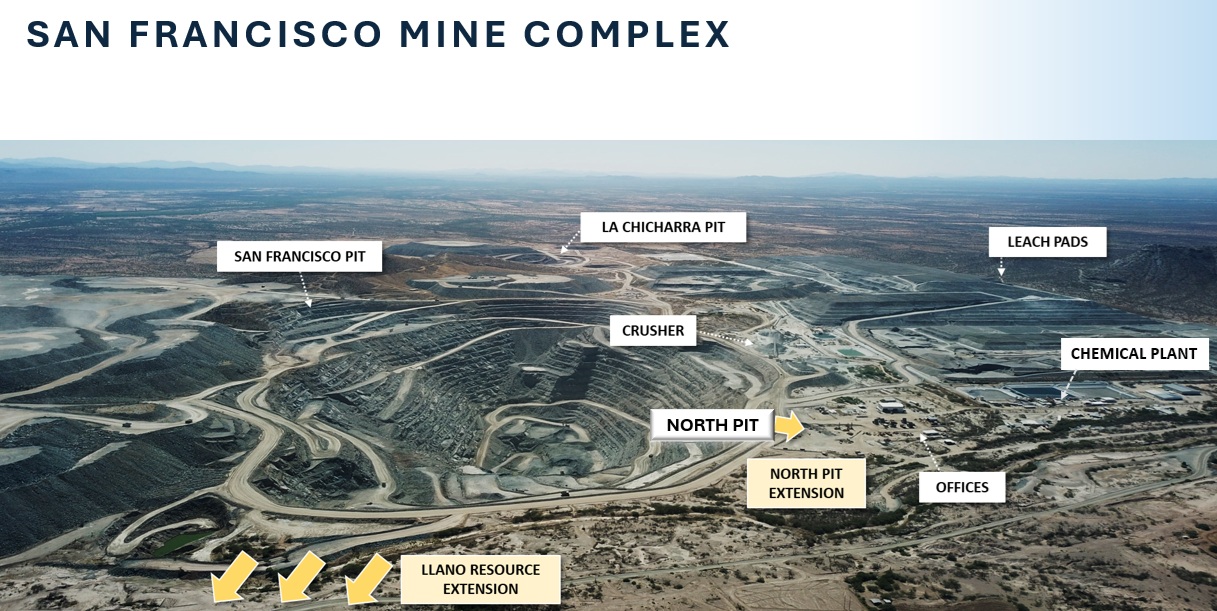
If there is one development project that could materially change Goldgroup's production profile, it is San Francisco.
Located in Sonora, San Francisco is a formerly producing open-pit gold operation with substantial existing infrastructure, including crushing and processing facilities, leach pads, power, dumps and established haul-road infrastructure.
The San Francisco project hosts Measured Mineral Resources of 48.3 million tonnes grading 0.37 g/t gold containing 581,700 ounces of gold and Indicated Mineral Resources of 56.8 million tonnes grading 0.35 g/t gold containing 644,900 ounces of gold, for total Measured and Indicated Mineral Resources of 105.1 million tonnes grading 0.36 g/t Au containing approximately 1.23 million ounces of gold. Inferred Mineral Resources total 17.3 million tonnes grading 0.32 g/t gold containing 178,400 ounces of gold. The Mineral Resource Estimate is effective April 30, 2026. Mineral resources are not mineral reserves and do not have demonstrated economic viability.
For Goldgroup, the significance of San Francisco extends beyond the resource itself.
The project has existing infrastructure and a history of production, potentially providing a foundation from which to evaluate a restart rather than developing an entirely new operation from the ground up.
Goldgroup is currently undertaking drilling and mine-planning work and has stated that its goal is to establish a clear pathway toward a potential restart of production.
Growth Does Not Depend on a Single Discovery
Another important aspect of the expanded Goldgroup story is that growth is not dependent on one exploration hole or one new discovery.
The Company has opportunities across its portfolio.
- At Don David, exploration is continuing across the District and additional targets have been identified as part of a regional development plan.
- At Cerro Prieto, the Company is evaluating additional exploration targets and opportunities that could potentially contribute to resources and mine life.
- At San Francisco, drilling and mine planning are underway as the Company evaluates the potential for a restart.
- And at Back Forty, additional technical and feasibility work is advancing a substantial North American development opportunity.
Each opportunity has its own risks and timetable, but together they create multiple potential pathways for Goldgroup to expand its business.
Back Forty: A Longer-Term Opportunity
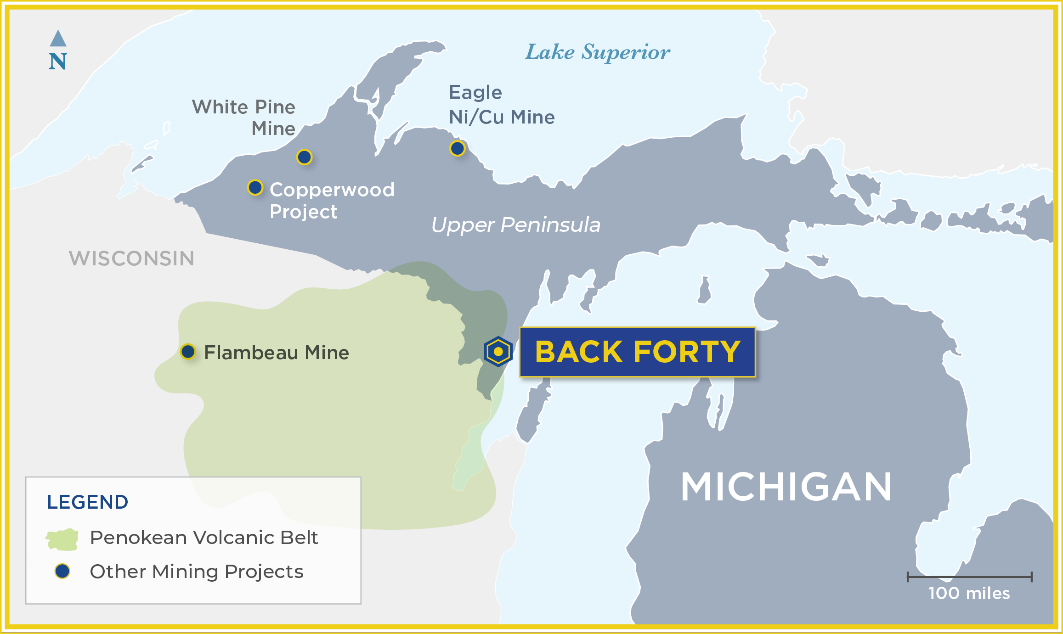
Back Forty adds another dimension to the portfolio.
Located in Michigan's Upper Peninsula, the project is a large-scale VMS development opportunity containing gold, silver, copper and zinc.
The 100%-owned project encompasses approximately 1,304 hectares and contains gold, silver, copper and zinc mineralization.
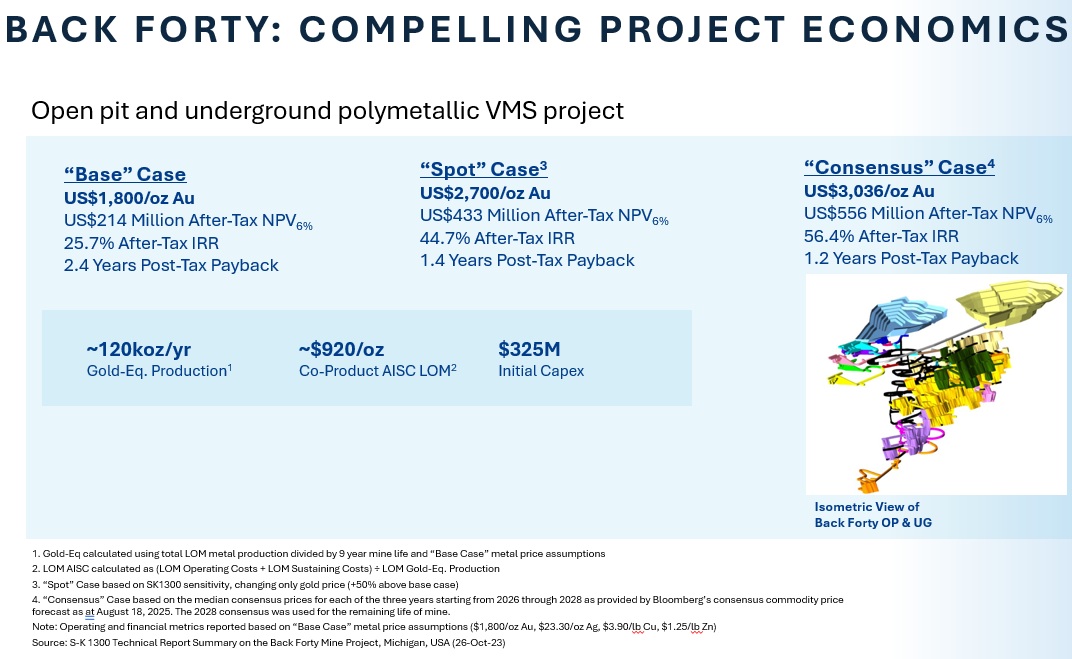
The Back Forty project hosts Indicated Mineral Resources of approximately 13.3 million tonnes grading 2.20 g/t gold, 26 g/t silver, 0.38% copper and 3.35% zinc, together with Inferred Mineral Resources of approximately 1.2 million tonnes grading 2.33 g/t gold, 37 g/t silver, 0.35% copper and 3.34% zinc, for a total Mineral Resource of approximately 14.5 million tonnes grading 2.21 g/t gold, 27 g/t silver, 0.38% copper and 3.35% zinc. The Mineral Resource Estimate has an effective date of September 30, 2023 and was prepared in accordance with subpart 1300 of Regulation S-K of the U.S. Securities and Exchange Commission. Mineral resources are not mineral reserves and do not have demonstrated economic viability.
See the Back Forty Technical Report (defined below) for more details, including that (i) the project includes an 18.5% gold stream, reduced to 9.25% after 105 koz Au @ 30% spot gold (maximum US$600/oz Au) and an 85% silver stream @ US$4/oz Ag. ; and (ii) Osisko Gold Royalties to further pay Gold Resource US$5 million on completion of an updated feasibility study and US$25 million on the first drawdown of an appropriate project debt financing facility.
A preliminary economic assessment (“PEA”) for the Back Forty project with an effective date of September 30, 2023 estimated, using a base case at US$1,800 gold, an after-tax net present value (“NPV”) (6% discount rate) of approximately US$214 milliom, an after-tax internal rate of return (“IRR”) of 25.7% and a payback period of approximately 2.4 years. At a gold price of US$2,700/oz, the PEA estimated an after-tax NPV (6%) of approximately US$433 million and an after-tax NPV IRR of 44.7%. The project contemplates a combination of open-pit and underground mining with processing of approximately 2,500 tonnes per day and average life-of-mine gold-equivalent production of approximately 120,000 ounces per year.
The PEA is preliminary in nature and includes Inferred Mineral Resources that are considered too speculative geologically to have the economic considerations applied to them that would enable them to be categorized as Mineral Reserves. There is no certainty that the results of the PEA will be realized. The figures in the PEA carry the normal development and
If gold remains structurally elevated, Back Forty could become increasingly valuable.
The project remains subject to additional technical work, economic evaluation, permitting, financing and development decisions.
For Goldgroup, Back Forty nevertheless provides exposure to a significant North American development opportunity and adds diversification beyond its Mexican producing operations!
Gold Prices and the Operating Environment
There is no guarantee that gold prices will continue to rise. However, several major analysts have published forecasts calling for higher gold prices, which could provide a supportive backdrop for companies operating in the precious metals sector, including Goldgroup.

If gold prices were to approach the $6,000-per-ounce level projected by some analysts, a higher-price environment could affect the economics of existing operations and potential future production. The impact would depend on a range of factors, including production costs, operating performance, capital requirements and the actual price of gold.
For Goldgroup, the Company’s existing production and development plans provide context for considering how changes in the gold-price environment could affect its operations and overall business profile.
More Than Just a Gold Story
Gold is the primary focus, but Goldgroup also has meaningful exposure to silver and base metals.
This can provide diversification in an environment where individual metal prices can move in different directions.

Gold is clearly the headline metal, but the silver component of the Goldgroup story shouldn’t be overlooked.
Silver has experienced an extraordinary year of its own, with pricing reaching record levels $115/oz in 2026 before undergoing a correction.
Goldgroup's Don David mine is a polymetallic operation producing gold, silver, copper, lead and zinc.
This gives GORO something that a pure-play gold producer doesn't necessarily have: multiple precious- and base-metal revenue streams.
Experience in Mexico Matters
Goldgroup isn’t entering Mexico and learning the mining business from scratch.
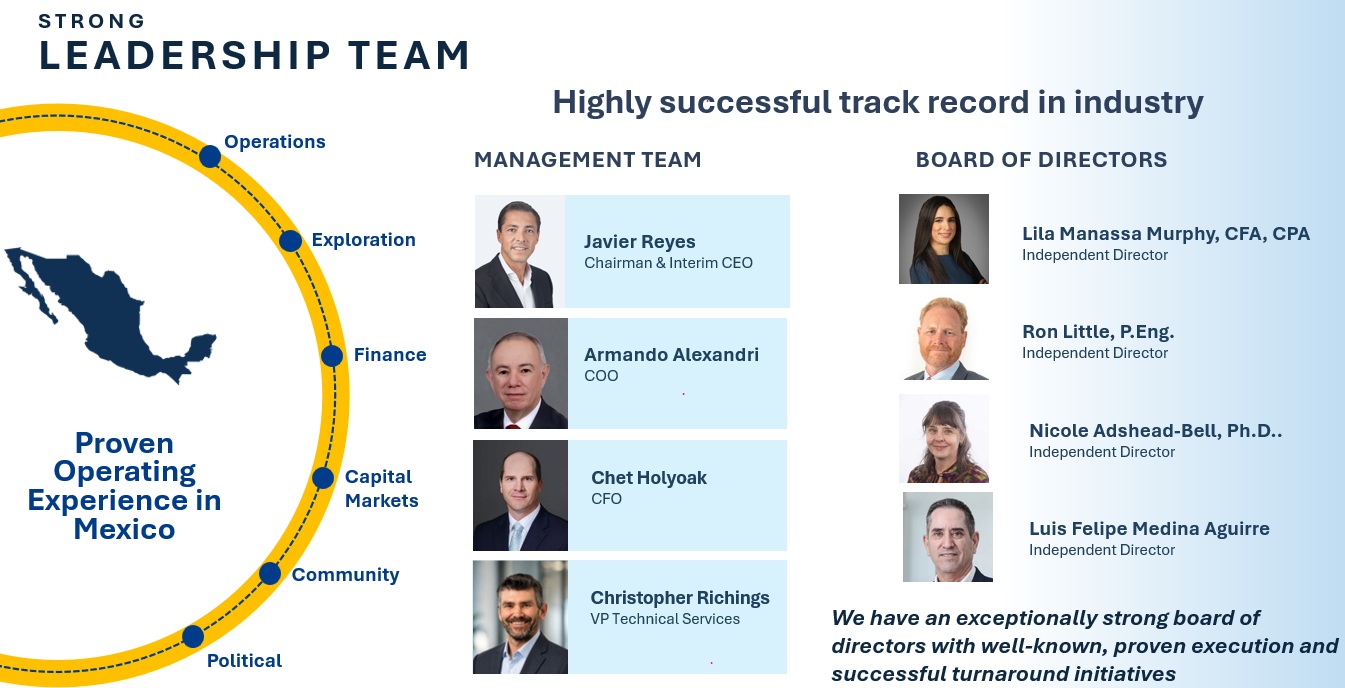
The Company is backed by an experienced technical and operating team with extensive expertise in mine development, operations, exploration and corporate finance throughout Mexico and the Americas.
That local knowledge can be a meaningful advantage when operating multiple mines and advancing new projects in Mexico, where successful execution depends on far more than geology—it requires experience navigating permitting, infrastructure, contractors, workforce, communities and the realities of operating in established mining districts.
One standout is Armando Alexandri, Goldgroup's COO, who brings more than 40 years of mining experience, with much of that experience in Mexico. His operational background spans underground and open-pit mines and processing plants across states including Sonora, Oaxaca, Chihuahua, Guerrero and others. He has also been credited with helping turn around and return mining operations to profitability.
For a company targeting production growth, and a potential San Francisco restart, having people who already understand how to build, operate and optimize mines in Mexico could be just as important as the ounces in the ground.
What Investors Should Watch
With the merger with Gold Resource now completed, attention turns to Goldgroup’s execution. Among the developments worth watching are:
- Don David: production, operating improvements and exploration results;
- Cerro Prieto: production performance and exploration/resource opportunities;
- San Francisco: drilling, mine planning and the pathway toward a potential restart;
- Back Forty: continued technical and feasibility work;
- Balance sheet: cash generation and capital allocation; and
- Commodity prices: particularly gold and silver.
Each of these could influence the Company's future production profile and financial performance.
The Bottom Line
Goldgroup's transformation during 2026 has created a substantially different company.
Two Producing Assets Today. A Potential Restart Ahead. Potentially Millions of Ounces of Mineral Resources in the Ground.
The Company now has two producing operations, a potential restart opportunity and a significant longer-term development project, together with exploration opportunities across its portfolio.
That creates an interesting combination.
- There is current production.
- There is infrastructure and operating experience.
- There are opportunities to improve existing operations.
- There is potential for additional resources through exploration.
- And there is a potential production catalyst at San Francisco.
None of these outcomes is guaranteed, and each requires successful execution. But that is precisely what makes the next stage of Goldgroup's development important to watch.
The Company has assembled the assets. The focus now shifts to what it can accomplish with them!
To reiterate investment highlights:
- Expanded Portfolio: The July combination significantly expanded Goldgroup’s producing and development assets.
- Growing Production: Goldgroup is targeting increased production.
- Gold & Silver Exposure: The Company provides exposure to both metals through its producing operations.
- San Francisco Potential: The formerly producing Sonora operation could provide additional production if successfully restarted.
- Financial Flexibility: Goldgroup does not currently have a material amount of debt.
- Development Upside: The Michigan project and ongoing exploration provide additional longer-term growth opportunities.
- Potential Re-Rating: Rising production and the expanded asset base could support greater investor attention as the Company progresses.
- Strong Balance Sheet & Insider Support: Goldgroup has financial flexibility as it advances its growth plans. The Company also has notable investor support, with Eric Sprott indirectly holding a meaningful position.
For precious-metals investors looking beyond the next quarter, Goldgroup Mining, Inc. (NYSE American: GORO; TSXV: GORO) offers a growing platform with multiple potential catalysts that could shape its next phase of growth.
Sincerely,
TopStocks.com